Article
What retailers are prioritizing in 2026
Retail leaders from Northern Tool and Lids share how checkout speed, loyalty friction, and unified payments are shaping their strategy—and why payments are becoming a lever for growth, not just infrastructure.
Retail store openings hit a three-year high in H2 2025 and global ecommerce retail sales reached $6.42 trillion last year, even as inflation squeezed consumer spending.
Shoppers are still buying. But they’re more selective about when, where and how they spend. Kearney describes this shift as “selective spending” in its latest Consumer Stress Index update: consumers are in control, and expectations are higher at every touchpoint.
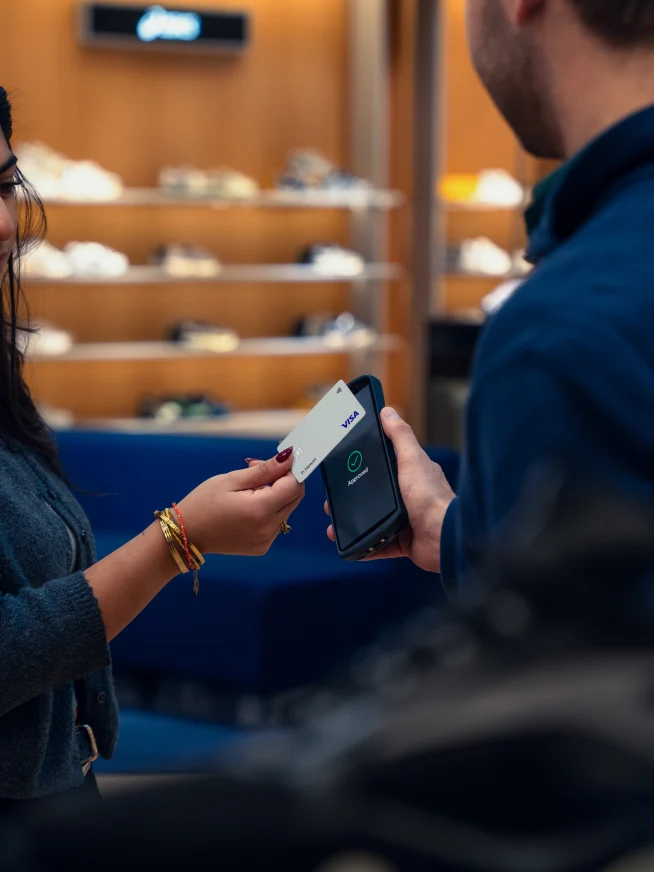
At NRF, we saw these priorities play out in real time. Northern Tool and Lids both hosted live demo stations at the Adyen booth, showing how their teams are using unified payments to move faster, reduce friction, and operate with more confidence across channels.
We spoke with both retailers about what's driving their retail strategy heading into the new year, and how shifting consumer behaviors and unified payments are opening up new opportunities across the customer journey.
Three themes dominated: checkout speed, loyalty friction, and operational complexity.
Why these priorities matter now
These aren't isolated challenges.
According to Adyen's 2025 Retail Index, 40% of consumers now expect to shop with retailers across multiple touchpoints: social media, apps, and stores. And while physical stores remain the preferred channel for 39% of shoppers, they want digital convenience woven in.
The retailers solving for both are the ones gaining ground. That's why Northern Tool and Lids are focused on areas where payments directly impact the customer experience.
Theme #1: Speed at checkout
"Customers want more control during checkout, whether flexible payment options, stored credentials, or faster repeat purchasing," said Hayden Hughes, Sr. Manager of Loyalty and CX at Northern Tool.
The data backs this up. Checkout flows that take longer than 30 seconds see 18% higher cart abandonment, according to Baymard Institute. For Northern Tool's commercial customers, contractors who need to grab tools and get back to the job site quickly, every extra second can cost them sales.
In response, Northern Tool spent 12 months identifying friction points across customer, employee, and back-office workflows. Their focus now is cutting checkout time without adding operational complexity.
Theme #2: Loyalty enrollment
"Traffic into stores is changing how customers interact with us," said Connor Mullin, Product Owner at Lids. "We want to make it easy for them to join our loyalty program and pay—whether they're shopping online or in-store."
The stakes are high: Loyalty members spend 2.3x more annually than non-members in retail, per a 2024 Bond Brand Loyalty study. But 70% of consumers abandon loyalty sign-ups due to lengthy enrollment processes.
Lids is redesigning how customers join Access Pass (their free tier) and upgrade to Premium (which offers double points and exclusive experiences) in 2026. The goal: reduce sign-up friction at the point of sale, where impulse enrollment is highest.
Theme #3: Unified payments
Both retailers cited a common operational headache: managing payments across online, mobile, and physical stores.
When payments are fragmented, teams deal with reconciliation delays, higher error rates, and slower innovation. This isn’t unique to retail. McKinsey's 2025 Global Payments Report found that reconciliation and settlement remain largely manual across the industry, even as companies invest heavily in AI automation elsewhere.
Northern Tool and Lids both moved to unified payment infrastructure to eliminate those inefficiencies. The benefit isn't just operational, it’s strategic.
"The partnership with Adyen gives us the ability to innovate while keeping our focus on serving customers and growing the business," said Hughes.
What this means heading into 2026
The retailers we talked to aren't prioritizing payments simply to cut costs. They're using payments to win more traffic, increase basket size, and retain customers.
NRF made one thing clear: payment decisions are no longer background infrastructure choices. They’re shaping how quickly retailers can move and how confidently they can grow.
As you evaluate payment strategy for ask:
What's your proof that this reduces checkout time? (ask for customer data, not demos)
How does this simplify operations across channels, not just add features?
Where's the ROI in 2026, not three years from now?
The retailers that win in 2026 will be the ones treating payments as a competitive advantage, not a constraint.
Did you stop by our booth at NRF?
Continue the conversation with our payments experts and talk through what these priorities mean for your business in 2026.